

Commercial HVAC Installation
Rooftop units, split systems, and heat pumps sized for the building you actually operate.
Explore HVAC installationGalaxy provides commercial HVAC repair, preventive maintenance, replacement, and new-construction installation for businesses in Contra Costa and Alameda counties, plus San Francisco. We work with rooftop units, split systems, heat pumps, and VRF/VRV equipment, with service recommendations based on the building and its use.

When a system goes down, work slows, tenants call, and the cost keeps moving. We bring commercial focus to every service call.
Clear communication. Technical depth. A plan that respects the way your building operates.
Start a conversationInstallation, diagnostics, preventive care, and equipment upgrades for your building.
Rooftop units, split systems, and heat pumps sized for the building you actually operate.
Explore HVAC installation
Clear diagnostics and decisive service when comfort, production, or tenants cannot wait.
Explore HVAC repair
Quarterly and semiannual plans that catch small issues before they become interruptions.
Explore HVAC maintenance
Full system replacement and upgrades planned around your operating hours.
Explore HVAC replacement
Ductwork and airflow improvements for steady comfort throughout your space.
Explore ductwork services
Commercial HVAC installation for new buildings, with equipment sizing, ductwork, and air distribution planned together.
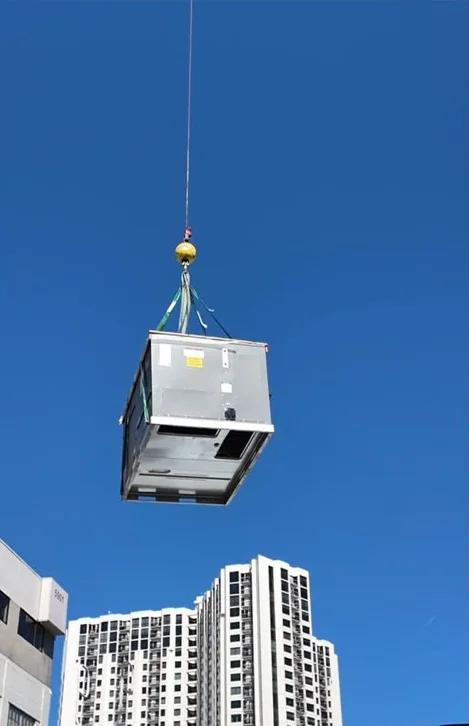
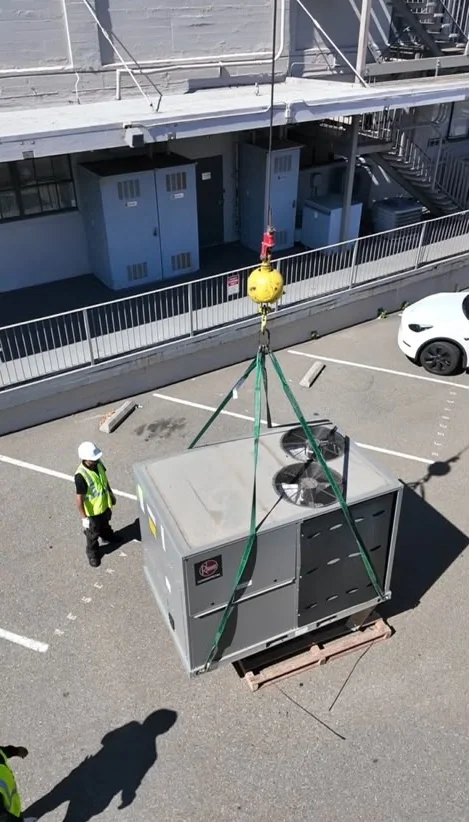
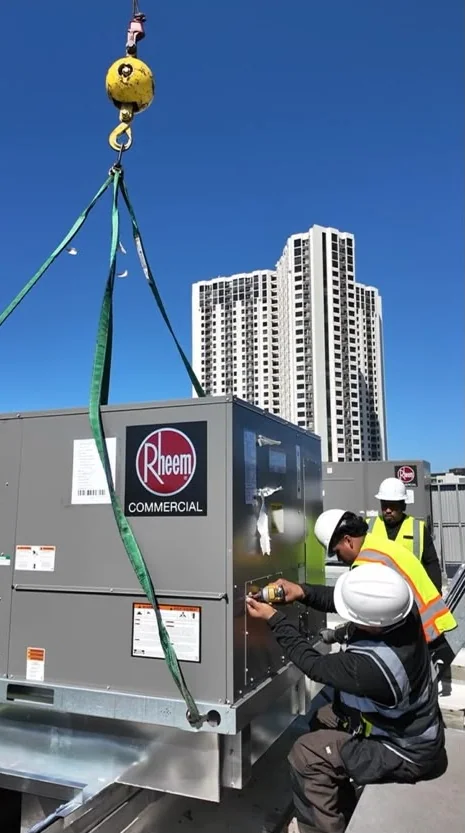
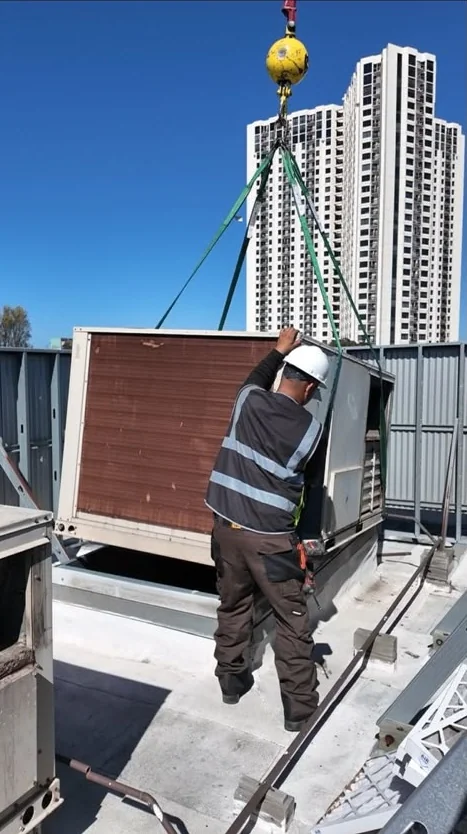
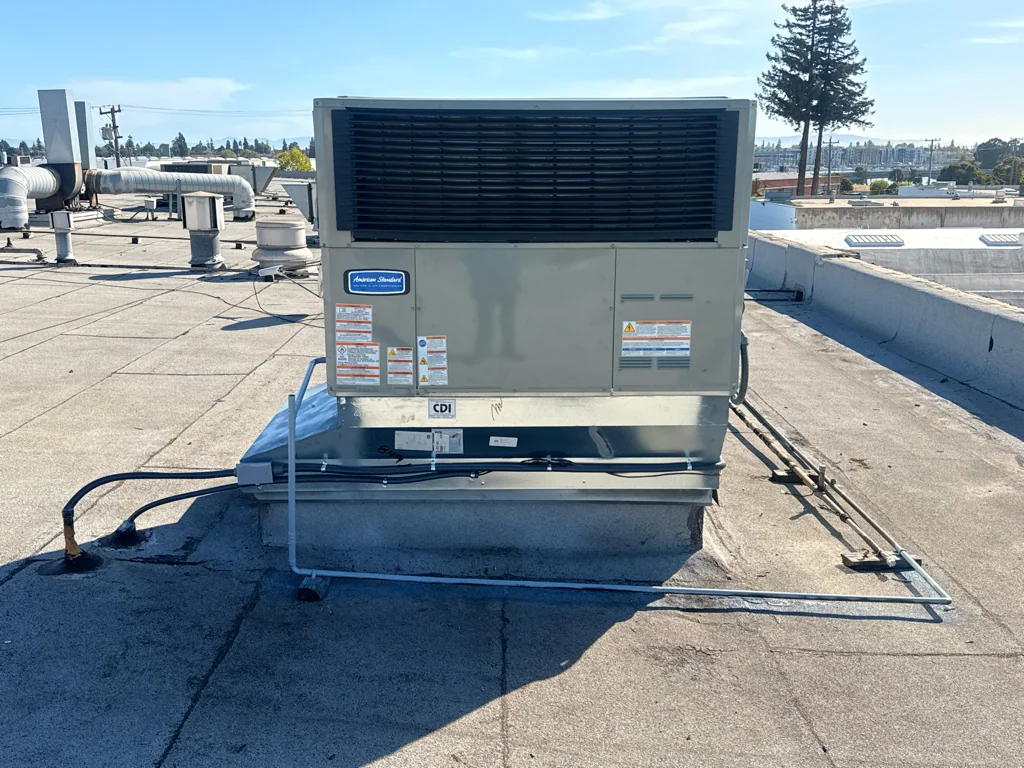
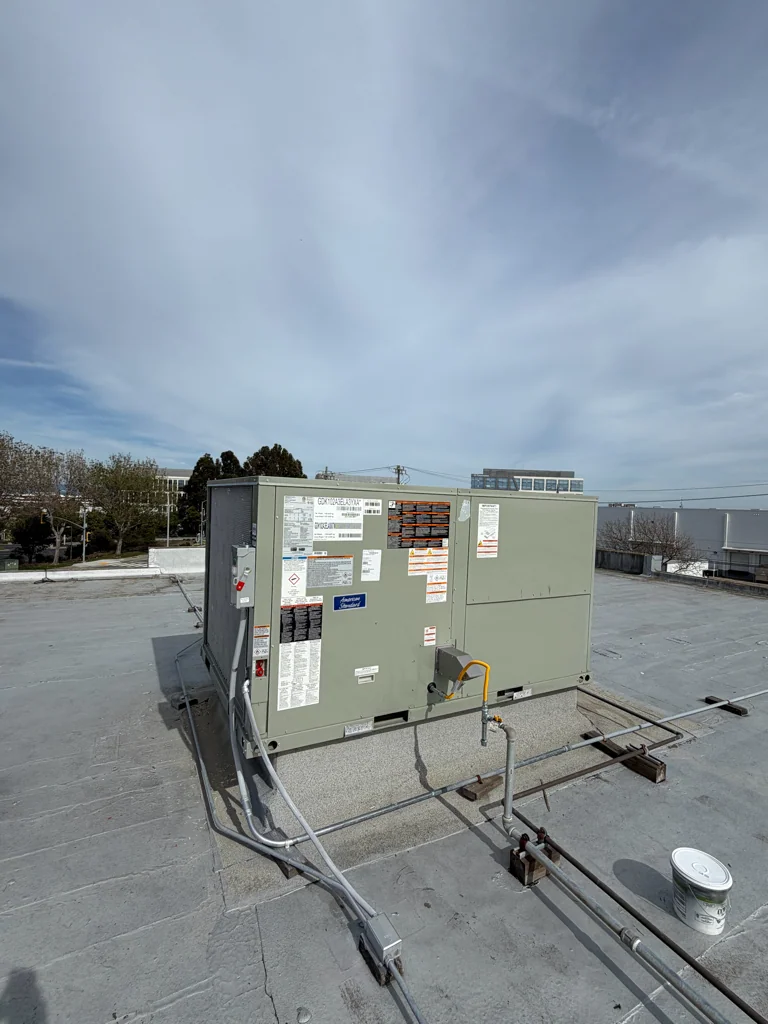
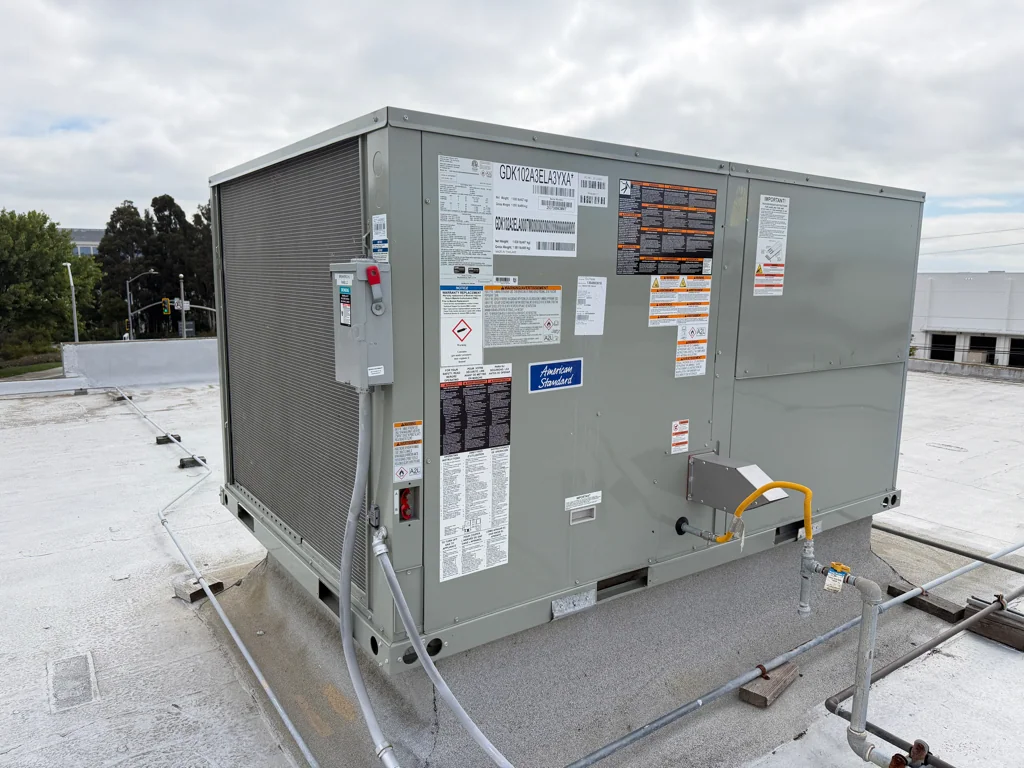
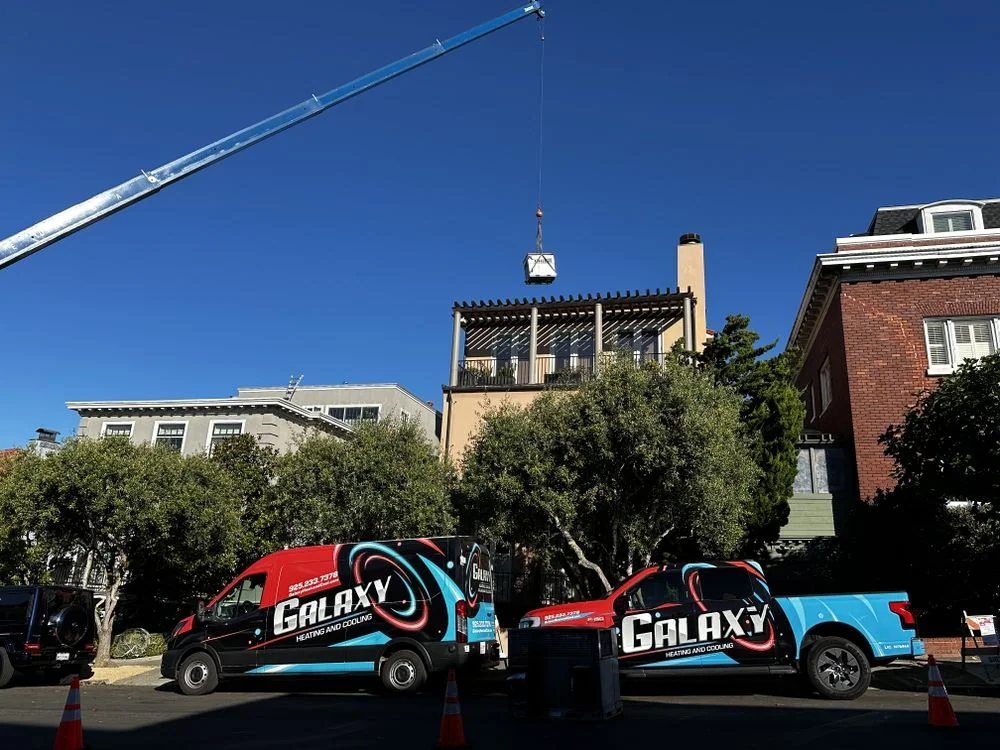
Explore new construction HVACPhotos from Galaxy rooftop and packaged-unit installations, including crane-assisted replacement work. Select a photo to open the larger image in a new tab.
Commercial heating and cooling is about more than choosing a temperature. A system must respond to the way a property is occupied, the equipment inside it, the outdoor conditions, and the air distribution serving each space. For a business owner or property manager, understanding those relationships makes it easier to describe a problem, evaluate a recommendation, and plan the next investment.
Galaxy provides commercial HVAC repair, preventive maintenance, installation, and replacement across Contra Costa and Alameda counties, plus San Francisco. The starting point is the building and its actual operating needs—not an assumption that every office, restaurant, or retail property needs the same solution.
People, lighting, equipment, glass, roof exposure, and outdoor air all contribute to a building’s heating and cooling requirements. Those demands also change during the day. A conference room that is comfortable when empty may become warm during a meeting; a west-facing retail space may have a different afternoon load than the rooms behind it. A single thermostat reading cannot explain every condition the system is being asked to manage.
Equipment capacity and air delivery are related, but they are not interchangeable. A larger unit will not automatically correct a restricted duct, a poorly placed sensor, or an occupied space receiving too little airflow. Before changing equipment, it is useful to understand which areas are affected, when the complaint occurs, and whether occupancy or the interior layout has changed.
Packaged rooftop units combine major heating and cooling components in equipment located above the occupied space. Commercial split systems separate indoor and outdoor components, while variable refrigerant flow systems serve multiple indoor zones through a connected refrigerant network. Heat pumps provide heating and cooling by moving heat rather than relying solely on a separate fuel-fired heating section. The right arrangement depends on the property, not just the equipment category.
When comparing systems, consider access for service, available electrical infrastructure, existing ducts, the number of independently controlled spaces, and the building’s operating schedule. More zoning can be valuable where tenants have different needs, but it also changes the controls and maintenance requirements. An equipment recommendation should explain why the proposed system fits those conditions, rather than relying on a brand name or a general efficiency claim.
An office, fitness studio, restaurant, and warehouse place different demands on the same floor area. Meeting-room occupancy, doors opening frequently, process heat, and long operating hours can all affect comfort. In a restaurant, exhaust and replacement outdoor air should be considered together with space conditioning. In a medical or dental office, any specific environmental requirements should be identified separately from the general comfort system.
A tenant improvement can change those demands without changing the rooftop equipment. New partitions can interrupt air distribution; a converted storage room may need more conditioning after it becomes occupied workspace. Reviewing the use of each zone helps distinguish a mechanical fault from a system that no longer matches the space. That distinction matters because repairing an operating component will not resolve a fundamental mismatch in the building layout.
Coastal and inland properties can have different seasonal cooling demands, but conditions at the actual building matter more than a regional label. Roof exposure, nearby obstructions, outdoor-air intake locations, and the hours when a business is busiest all affect how equipment operates. Two properties in the same city can therefore need different control schedules and service priorities.
The assessment should also consider changes that are easy to overlook: a roof alteration, blocked access around an outdoor unit, a revised opening schedule, or equipment added inside a tenant space. Keeping a record of these changes gives the service team useful context. It can explain why a system that previously performed acceptably is now struggling, without assuming that the only answer is immediate replacement.
Repair addresses an identified fault: a failed component, a control problem, an airflow restriction, or another condition preventing correct operation. Preventive maintenance is an ongoing program for inspecting equipment, recording its condition, and identifying developing issues. Replacement is a capital decision that should account for the existing system’s condition and its ability to serve the building. These services support one another, but they answer different questions.
A recurring complaint deserves a clear explanation of what was found and what remains uncertain. Maintenance should not be presented as a guarantee against breakdowns, and an older unit should not be condemned solely because of its age. Useful recommendations separate work needed now from items that can be monitored or planned. That gives owners a more practical basis for coordinating budgets, tenant needs, and future equipment decisions.
Before approving work, establish which equipment and spaces are included, what symptoms or performance objectives are being addressed, and how the outcome will be checked. A service report should make the findings understandable to someone who does not work on HVAC equipment every day. For larger projects, the discussion should identify the responsibilities for access, electrical or duct modifications, permits where applicable, and coordination with other building work.
Licensing is an important qualification, but it is not a substitute for a defined scope. Galaxy’s California contractor license is #1076868, with B, C-10, and C-20 classifications. For your initial conversation, have the property address, equipment information if available, affected areas, and preferred access arrangements ready. Specific information helps the team understand the request and explain the next appropriate step without treating an inquiry as a confirmed appointment.
Choose a quarterly or semiannual plan tuned to your equipment, occupancy, and operating hours. Every visit ends with a detailed report.
Ask about a maintenance plan See maintenance programsServing Contra Costa and Alameda counties, plus San Francisco.
Contact us to confirm service at your location
We work around the rhythms of businesses that need the air right, the temperature steady, and the doors open.
Ready for commercial work.
Licensed, bonded, insured. California DIR registered. Title 24 work meets or exceeds code.
Bay Area Commercial HVAC is operated by Galaxy Heating & Air Conditioning. Based in Pleasant Hill, Galaxy provides commercial HVAC repair, maintenance, replacement, and new-construction installation in Contra Costa and Alameda counties, plus San Francisco.
For commercial inquiries, call (925) 590-0250. Learn more about our company on the main Galaxy website.
Visit Galaxy Heating & Air ConditioningCSLB #1076868 · B, C-10, C-20
Review the current license status, classifications, and disclosures directly with the California Contractors State License Board.
Verify license #1076868 on CSLBTell us what is happening at your facility. We will connect you with the right commercial HVAC specialist.